The next evolution of AI—Agentic AI—is focused on enhancing autonomy at the edge. Agentic AI is the closest model to
how
humans function. Leveraging software systems called Agents, Agentic AI deploys AI to pursue goals on our behalf.
How will our industry spark the incredible transformative potential of a world that anticipates and automates? It
starts by enabling the autonomous edge. That is the message of Jens Hinrichsen’s Computex Symposium keynote, a talk that traces the evolution of
artificial intelligence (AI) from the first glimpses of perception-based AI to the current frontier of agentic
intelligence. Along the way, Hinrichsen explains how autonomous edge systems benefit from purpose-built trusted
(safe and
secure) platforms.
It all starts with the premise that AI should make our lives better, more productive, more sustainable and safer—and
it makes sense that these goals will be achievable when AI is closer to us—a part of our world where we
interact with others and our surroundings in our own time. We call this zone the "edge" and AI must enter it for
real-time autonomous enablement.
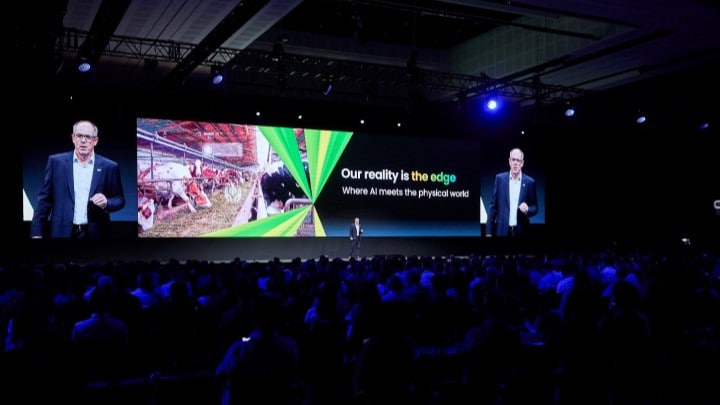
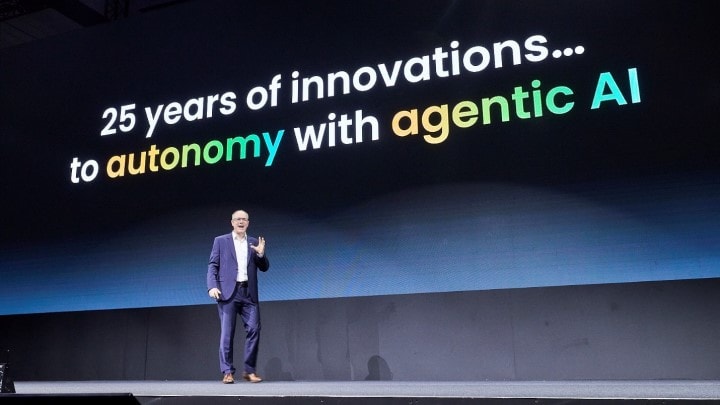 Jens Hinrichsen delivers a keynote highlighting agentic AI and the role of
the autonomous edge.
Jens Hinrichsen delivers a keynote highlighting agentic AI and the role of
the autonomous edge.
Data Unlocks Possibilities
The shift to Agentic AI is important because it gets us around an impediment to the AI-Autonomous connection—the
problem of
data. We’re generating massive amounts of valuable data, in fact, more data in the last three years than in our
entire human history. And while there’s been great progress toward leveraging it with cloud-based AI muscle, we
need more finesse for the final mile in the autonomous journey.
We need to enable actionable decisions at the edge in real time. Our physical world is much too vast to be
uploaded to the cloud…we need to bring AI to the Intelligent Edge.
Ali Osman Ors, Director, AI ML Strategy and Technologies, Edge Processing, NXP Semiconductors
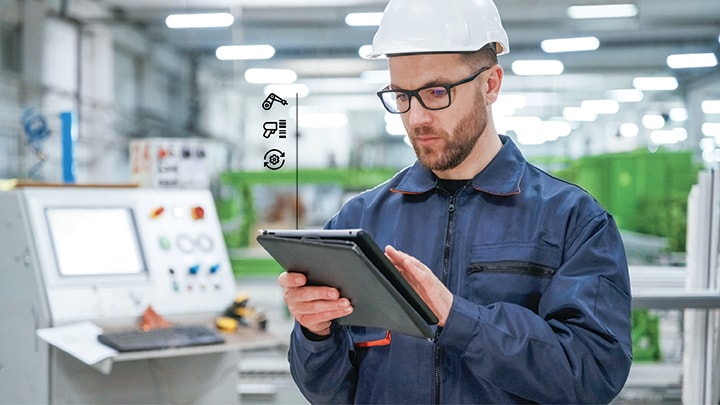 The "final mile" in our autonomous edge journey requires finesse and
efficiency among hardware, software and data.
The "final mile" in our autonomous edge journey requires finesse and
efficiency among hardware, software and data.
AI at the edge dramatically reduces data transport and bandwidth because processing is done where the action is. As a
result, limited data transport to the cloud is required and “always-on” cloud connectivity isn’t essential.
At the edge, AI can also bypass round trips to the cloud to enable the types of rapid and actionable decisions that
impact us most, like Advanced Driver Assistance Systems (ADAS) functionalities in smart cars, smart devices that
detect health anomalies and a limitless
wish list of decisions that can make life better and safer.
To make this type of action and processing possible, we need both edge hardware—optimized for energy efficiency—and a
new level of trust in technology through safety, security and data privacy. As a result of moving to the edge,
these important enabling technologies can be delivered seamlessly.
The Evolution of AI Toward Agentic AI
To help the audience understand where we are headed with AI, Hinrichsen took a look back at its breathtaking
transformation. He charted how
perception AI created an "aware edge"—one that is able to interpret signals and recognize 'who is who' and 'what is
what'.
This perception capability, driven by progress in neural networks, took 10 years to get to the edge.
The next step in AI’s transformation was generative AI, where the edge became interactive. With the breakthrough of
transformer models, this interactivity was enabled, serving as the foundation of today’s generative AI solutions.
Transformer-based large language models (LLMs) and vision language models (VLMs) offered the ability to interact
with
humans in a
natural way through words and visuals.
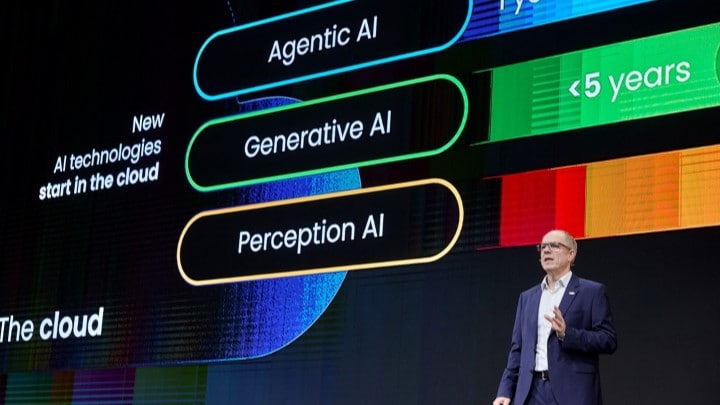 AI technologies are transforming into unique classes and migrating from
the cloud to the edge.
AI technologies are transforming into unique classes and migrating from
the cloud to the edge.
Gen AI progress has accelerated rapidly, benefiting the cloud—but even more so the edge, where smaller models now
match the capabilities of their larger predecessors. These smaller Gen AI LLMs, vision models and
multimodal models are better suited for the edge. But despite these amazing developments, interaction alone is not
enough.
Generative AI unlocks new possibilities for a variety of applications. Check out a practical case for generative AI at the edge .
 Recording of our multi modal gen AI model, running on a discrete MPU built
by NXP partner Kinara.
Recording of our multi modal gen AI model, running on a discrete MPU built
by NXP partner Kinara.
The Leap to Agentic AI: The Dawn of Companions for an Autonomous Future
AI agents think, refine, complete tasks and tie all the AI evolutionary
components of the past together to create a proactive edge. Agents can sense, think, act and independently
respond to the world in real time. They evaluate decisions, refine them and act. In other words, agentic AI enables
the autonomous edge and the real value in Edge AI comes with autonomy—when the systems become autonomous human
companions.
AI is driving innovation in industrial environments. Deep dive with Hinrichsen as he explores how AI agents can respond to a factory floor
anomaly .
The System Lift Required for the Autonomous Edge
The autonomous edge requires a heavy technology lift, which NXP addresses with system building blocks and
corresponding solutions.
NXP provides hardware (HW) building blocks for scalable processing platforms from simple microcontroller units (MCUs) to powerful Applications Processors for
Automotive and Industrial
platforms as well as tightly integrated power management
for maximum energy efficiency. We also provide safety and security, but also networking and connectivity
capabilities that
address the diverse needs and data rates.
NXP also provides comprehensive software to bring the system to life, including libraries, tools, drivers and
middleware tailored to the HW that bridge to the application software (SW). Accordingly, for middleware, we provide
a broad
collection of solutions customers can select for their specific use-case.
AI must be right-sized for the constraints of the edge as compute power, memory constraints and energy efficiency
take
center stage. This is why we developed the eIQ AI SW development
environment tools for model-development and deployment, providing model definition and right-sizing.
Autonomy only scales when we can trust it. It must be built with the safety and security.
Ali Osman Ors, Director, AI ML Strategy and Technologies, Edge Processing, NXP Semiconductors
Safety and Security provides the foundation for autonomous systems at the edge. Functional safety and security need to be ensured at the
system-level, end-to-end and tailored to individual use cases. For functional safety, we leverage our Automotive and
Industrial expertise—industries where the highest levels of functional safety are required. NXP defines functional
safety
on a system level, covering HW and SW as well as the application.
Security requires multiple end-to-end measures, and is deep in
NXP's
DNA from our heritage in providing passport, credit card and mobile wallet security at the
highest standards. To maintain our lead in security, NXP is already building post quantum cryptography (PCQ) into
our products and
we provide constant lifecycle management and secure over-the-air (OTA) updates.
It Takes Investment and an Ecosystem
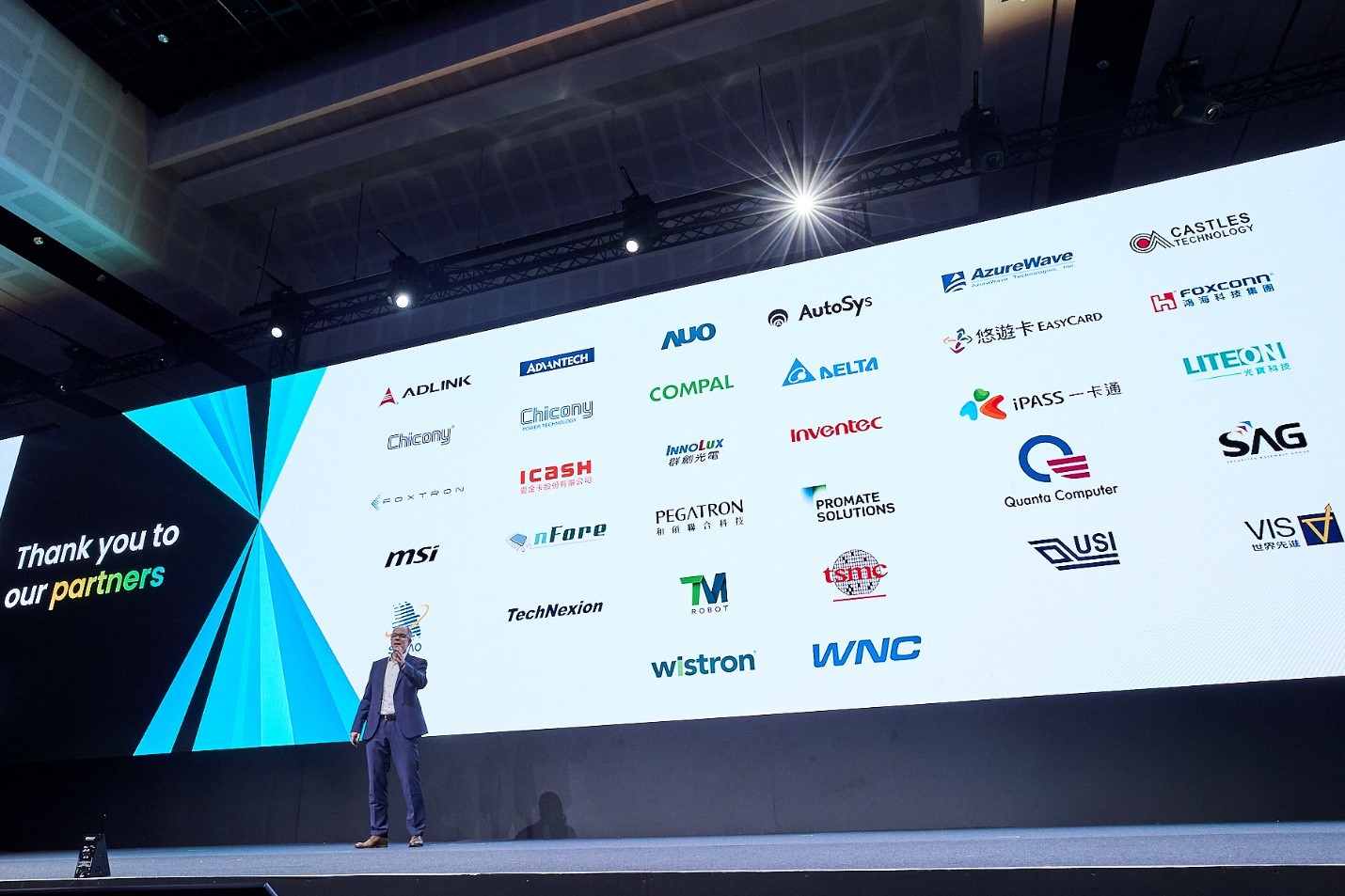 NXP’s edge AI ecosystem and solutions are supported by multiple trusted
partners.
NXP’s edge AI ecosystem and solutions are supported by multiple trusted
partners.
NXP recently announced our intent to acquire three companies: Kinara and Aviva Links, which are not yet finalized, and TTTech Auto, which has already been acquired.
- Kinara provides generative AI capable discrete neural processing units (NPUs) that are ideally suited for
implementing Agentic AI at the edge
- Aviva Links provides edge network capabilities for high-bandwidth asynchronous data transport
- TTTech Auto provides a safety-critical middleware platform
These acquisitions (which are currently going through regulatory approval), will accelerate our effort in enabling
the
autonomous edge.
In addition to our investments, we have a robust customer and partner collaboration, culminating in a rich ecosystem
of support for AI endeavors.
In the talk, Hinrichsen demonstrated how AI is accelerating at the edge, and faster than ever, before and exploring
the next step in the AI’s
evolution toward the autonomous edge. Agentic AI is showcasing how these systems can think, act and learn in ways
that
are truly incredible.
It takes an ecosystem to build it and this is basically how we make the autonomous future a reality.