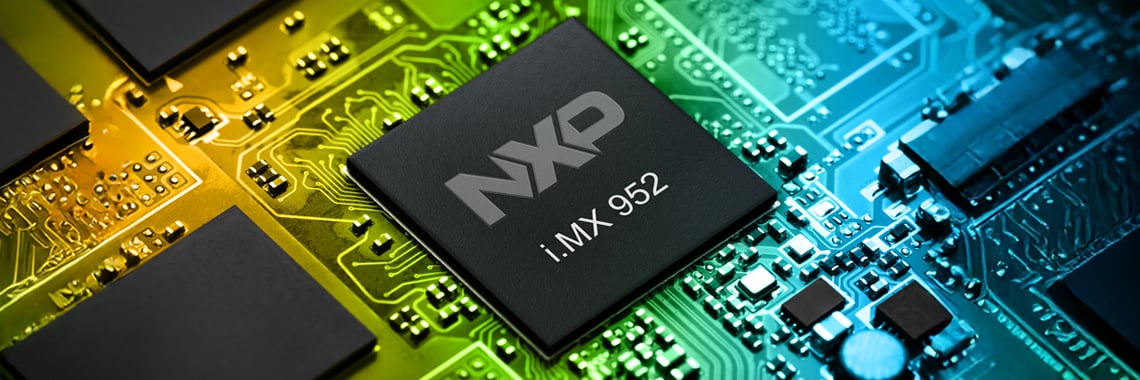
Local dimming of LED-backlit LCD panels or heads-up displays (HUDs) delivers the sharp contrast needed by automotive displays, enhancing road safety by reducing screen wash-out and glare. Not only that, but it does it more efficiently and cheaply than OLEDs. With our i.MX 952 applications processor we make implementing local dimming straightforward, increasing its appeal for safety-critical automotive displays.
Readability is key to road safety
Clear, readable automotive displays are essential to road safety. Displays such as speedometers, navigation prompts and warning alerts provide vital information that helps drivers better anticipate what lies ahead on the road. What’s more, research shows that high-contrast, well-lit displays reduce distraction and improve decision-making.
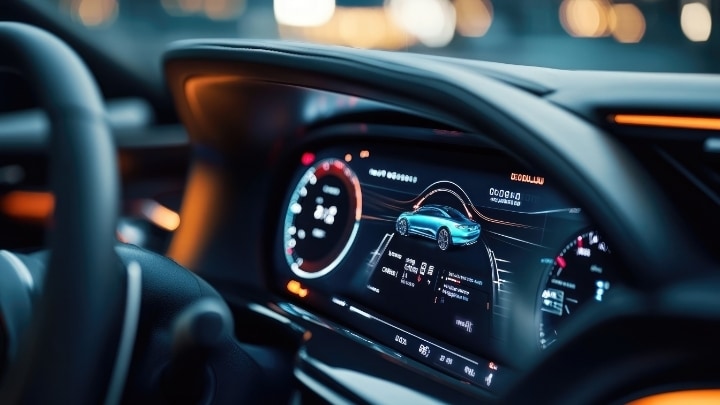 Enhanced readability in car and two-wheeler displays supports safer driving in any environment.
However, readability is becoming increasingly challenging as automotive design shifts towards curved, large-format and freeform digital displays to match consumer demands for smartphone-like display quality. Digital connected clusters (DCC), standalone head units, secondary displays and surround view systems are expected to deliver high-resolution graphics and dynamic content, often in intense ambient light or even direct sunlight.
This is a particular problem for motorcycles and the growing range of two- and four-wheel Light Electric Vehicles (LEVs) where displays are often outside and fully exposed to light. Additionally, this is an issue in Head-up Displays (HUDs), which also need to maintain clarity without impairing night vision.
Power your pixels intelligently.
Learn how the i.MX 952 processor brings dynamic local dimming to life.
Boosting display contrast and saving power
Local dimming addresses the readability issue by selectively reducing the LED backlight brightness for darker parts of the display, so black becomes true black instead of dark gray. This significantly increases image contrast without making illuminated areas brighter. Displays remain sharper and more readable in all lighting conditions, so drivers get the information they need without unnecessary distraction.
Switching off dark parts of the display automatically reduces power consumption. This is a real benefit in power-constrained automotive environments, and particularly for electric vehicles. The total amount of waste heat produced is also less, making thermal management easier and reducing the overall cost of the display system. This thermal improvement is particularly helpful with HUDs, which require very high lighting power to project images onto the windscreen, and can require costly cooling solutions to deal with the resulting heat generation.
As an added benefit, the increased contrast and associated sharper image enhances the perceived quality of the display, so users feel they are getting more value for their money. Local dimming offers all this without the increased cost associated with OLED or Micro-LED displays.
Complexity behind the contrast
Implementing local dimming involves dividing the display into hundreds of different zones and controlling each LED independently, based on the content being displayed. This requires real-time pixel-level processing to compensate for changes in brightness and to avoid visual artifacts like rectangular edges. And this must be done for every frame, which demands significant computational resources. Moreover, for safety-critical automotive displays, pixel adjustments must be functionally safe to ensure that vital information is always correctly rendered.
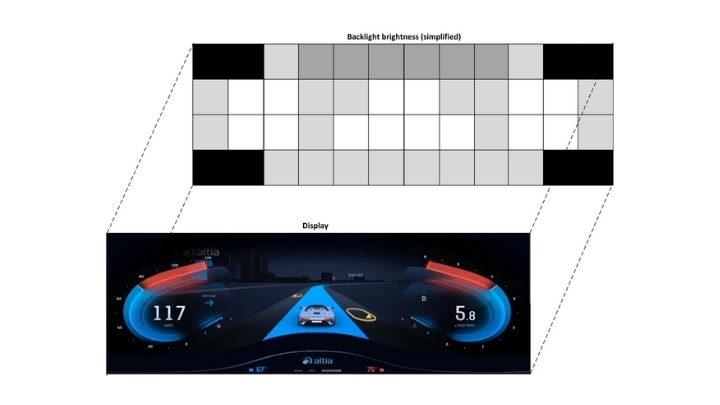 Simplified example of an instrument cluster display content with local dimming
The i.MX 952 applications processor: a smarter solution
Because of the various challenges involved, local dimming has typically required a separate, specially designed chip. But this adds costs and complexity. NXP’s i.MX 952 applications processor integrates local dimming directly into the display processing pipeline, avoiding the need for additional hardware.
An extension of our proven i.MX 95 application processor family, the i.MX 952 processor combines powerful AI-accelerated vision processing and immersive graphics abilities. It handles graphics, video playback and animated content as well as real-time pixel compensation for local dimming. Crucially, it supports the functionally safe pixel processing that is so essential for automotive applications.
By integrating local dimming into the main processor, the i.MX 952 processor simplifies the system architecture, lessens hardware complexity and cuts overall system costs. It also further reduces the need for thermal management features – a real plus in space-constrained systems.
Take the fast lane to better automotive displays
Local dimming is a cost- and power-efficient way to increase the contrast and perceived quality of automotive displays – and therefore help promote road safety. As the first display processor for automotive displays with local dimming capabilities built in, the i.MX 952 processor helps you deliver increased safety more easily and at lower overall cost. Learn more about local dimming, vision processing and NXP's i.MX 952 applications processor.