In today's world, drivers expect their vehicles to offer unparalleled
performance from the Advanced Driver Assistance Systems (ADAS), and radar
technology is at the forefront of delivering this promise. Unlike cameras or
LiDAR, radar excels in all weather conditions, providing robust and reliable
results.
Accurate perception is the key to navigating obstacles on the road.
High-resolution sensing is essential, and radar stands out as a cost-effective
and dependable solution, even in challenging conditions such as fog, darkness
and rain. Thanks to the advancements in semiconductor technology and software
algorithms, the latest generation of high-resolution radar sensors offer
remarkable performance enhancements.
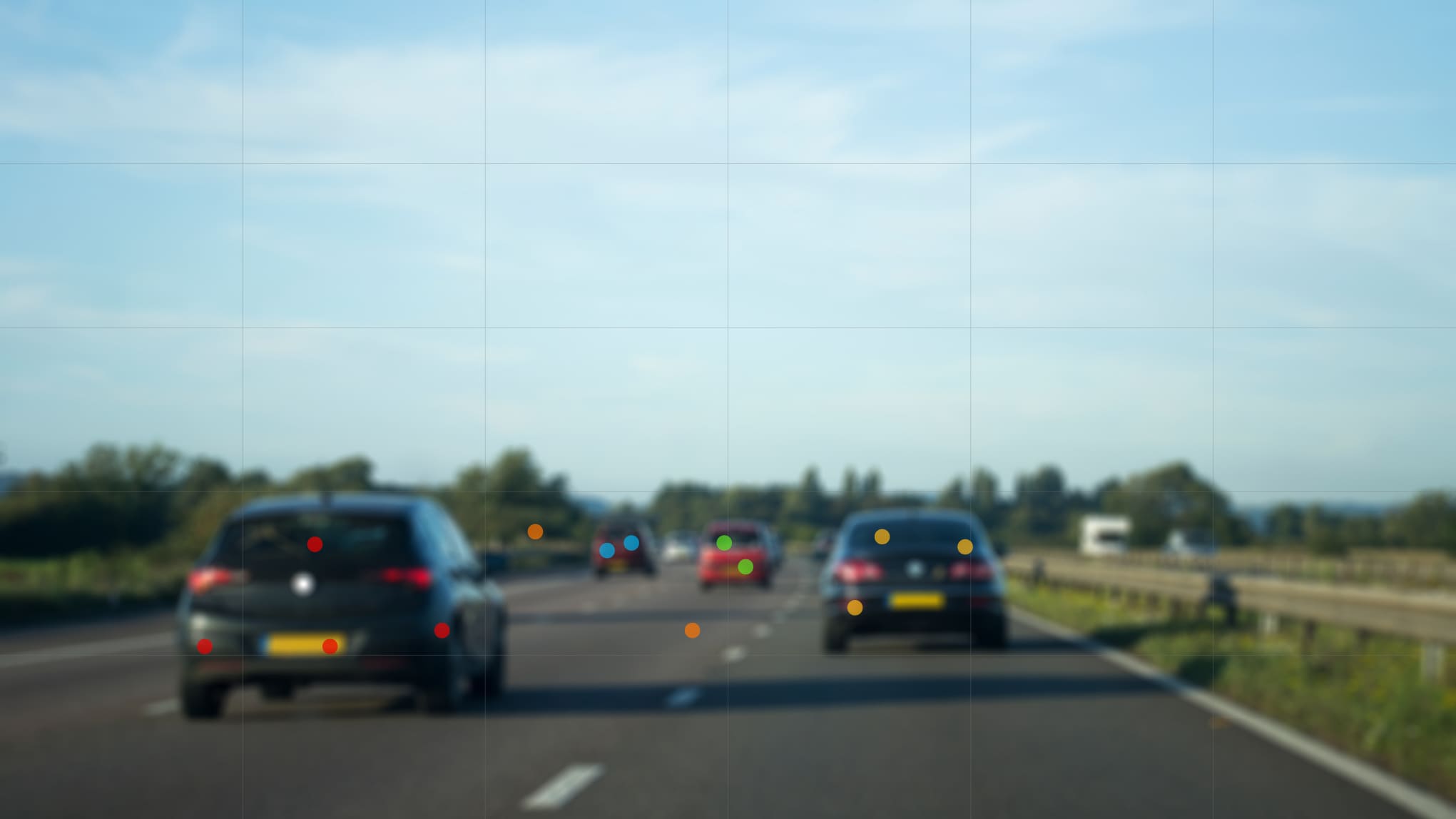
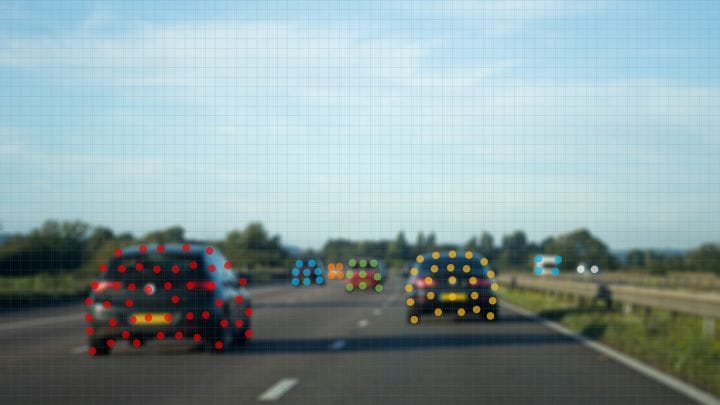 Figure 1: Standard and high-resolution radar detections.
However, the size of a radar system is directly related to its performance.
Larger radars have larger apertures resulting in higher resolution. This poses
a challenge in modern automotive applications where space is at a premium due
to mounting constraints and digital components. Imagine a conventional
Long-range radar with thousands of virtual channels, which theoretically can
offer high-resolution sensing capabilities, but with a large physical
footprint. In addition to mounting constraints, integrating this many channels
increases power consumption and costs.
Distributed Aperture Radar: A New Era in Vehicle Sensing
Enter
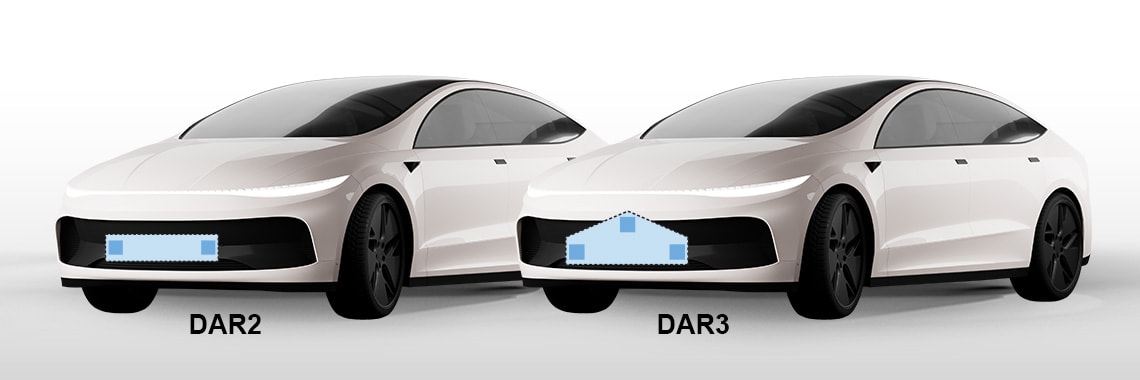
Distributed Aperture Radar (DAR), a game-changer in the world of radar technology. DAR uses multiple small
radar sensors that work together as a coherent system, forming a large virtual
aperture. DAR's coherent sensor fusion removes hardware constraints on
aperture size, achieving excellent angular resolution with significantly lower
power consumption than a single large sensor containing thousands of antennas.
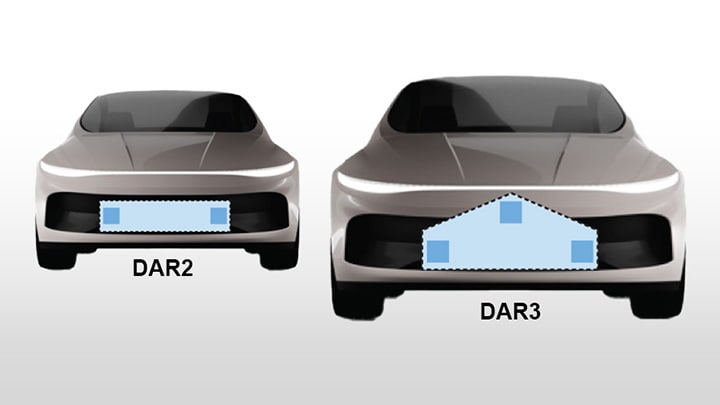 Figure 2: DAR delivers an excellent radar solution by combining multiple
standard sensors.
Figure 2: DAR delivers an excellent radar solution by combining multiple
standard sensors.
DAR's large virtual aperture enhances azimuth resolution by 0.5 degrees or
lower. This precision keeps close objects separate which is crucial for
long-distance sensing, especially at high speeds.
DAR has the potential to accelerate ADAS development and make autonomous
driving more accessible. Its simple, efficient and cost-effective hardware
offers OEMs the ability to scale ADAS functionality across a diverse range of
vehicles.
NXP and Zendar: Pioneering High-Resolution Radar for Automotive Applications
NXP and
Zendar are at the forefront of DAR technology, enhancing high-resolution
radar systems for automotive applications. Leveraging NXP's widely adopted
S32R radar processor platform
and RFCMOS
SAF8xxx one-chip SoCs, they
cater to the diverse architectures of car OEMs. Zendar's DAR software is
designed to run on radar processors like NXP’s S32R-based
PurpleBox reference design,
delivering a scalable and efficient solution for distributed radar systems.
Take the Next Step Toward Smarter, Safer Vehicles with DAR
DAR equips automotive companies to develop solutions that enhance safety and
provide a more enjoyable driving experiences. DAR is rapidly maturing, thanks
to its dependence on mainstream radar sensors. As it grows, DAR will gain
market trust, demonstrating how it can offer comfortable assisted driving
experiences at lower costs for both manufacturers and consumers.