Author

Monica Cid
Mónica Cid has worked in Mass Market Marketing for 3 years, focus on developer journey for industrial and consumer processors and microcontrollers. She is based in Guadalajara, Jalisco, Mexico.
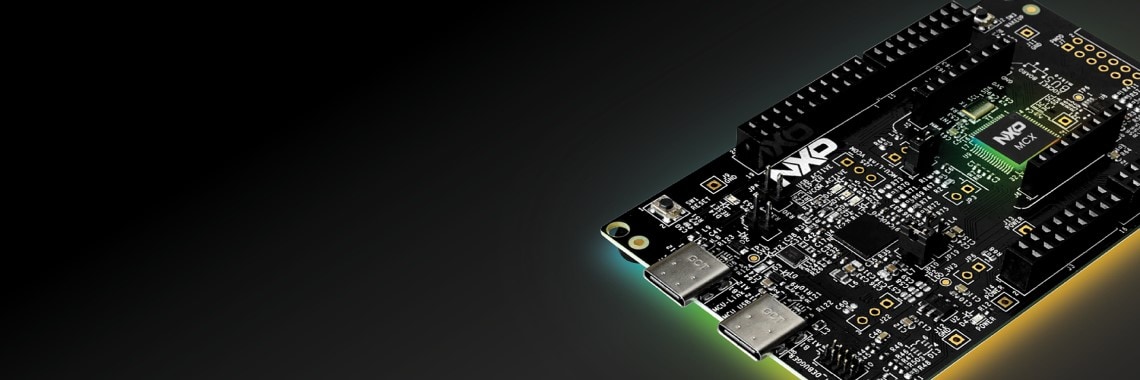
FRDM returns with MCX Microcontrollers (MCUs), offering developers a flexible, modular platform that goes beyond hardware. In today’s fast-moving tech world, FRDM stands out in the industry by supporting i.MX application processors, as well as general-purpose and wireless MCUs—all powered by a rich ecosystem designed for innovation.
In early 2024, NXP introduced enhanced FRDM development boards—this time powered by the MCX portfolio of MCUs. The original FRDM boards, built around the Kinetis family, were a huge success, becoming a go-to tool for embedded developers seeking accessibility, flexibility and community support. Now, with MCX, FRDM has evolved from a simple development board into a full-fledged platform—empowering developers to explore, prototype and innovate with ease.
But what does FRDM really mean today?
At its core, FRDM is more than just hardware. NXP has invested in making the developer experience both seamless and modern. One of the most exciting additions is MCUXpresso for Visual Studio Code (VS Code), which brings powerful development tools into a familiar and customizable environment. This integration allows developers to write, debug and deploy code efficiently, leveraging the flexibility of VS Code.
FRDM also embraces Zephyr real-time operating system (RTOS), a scalable, open-source operating system that is gaining traction across the embedded world. As a founding member of the Zephyr Project, NXP actively contributes to its development and ecosystem. With Zephyr support, developers can build robust, real-time applications while benefiting from a growing community and shared resources. The hardware itself is open source, enabling developers to study, modify and build upon the board designs. Such an environment cultivates fosters innovation and collaboration, making FRDM a true community-driven tool.
To support learning and skill development, NXP launched the FRDM Training Hub—a centralized resource offering tutorials, documentation and hands-on labs. Whether you're a student, hobbyist, or professional engineer, this Training Hub allows you to get started quickly while deepening your understanding of MCX and embedded systems.
Experience the FRDM to innovate. Learn more about the FRDM boards development journey.
FRDM’s evolution into a platform is most evident in how it bridges software and hardware. For instance, the boards are designed to be modular, allowing developers to easily expand functionality through add-ons and shields. This modularity supports rapid prototyping and experimentation, reducing barriers to innovation.
On the software side, our Application Code Hub (ACH) provides ready-to-use examples and reference implementations. Here developers can explore different use cases and adapt them to their own projects. This library of code helps accelerate development and reduce time-to-market.
Complementing the ACH is our Expansion Board Hub (EBH)—a curated collection of compatible boards and peripherals. Whether you need sensors, displays or wireless modules, the EBH helps you find the right tools to bring your ideas to life.
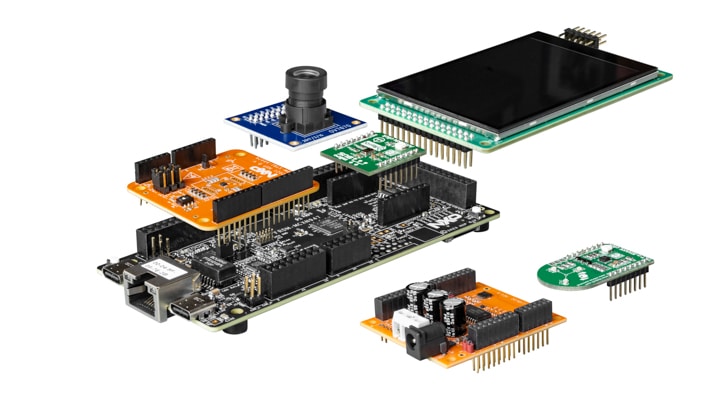
The new FRDM boards support a wide range of NXP solutions, making them ideal for scalable development:
In today’s hyper-competitive tech landscape, hardware alone no longer defines product value. With so many similar offerings in the market, differentiation emerges from the ecosystem—the tools, software, community and support that surround the hardware. FRDM understands this shift and innovates accordingly.
With innovation, it’s not just about having a powerful MCU; it’s about having access to training, open-source resources, modular hardware and a collaborative developer that accelerate development and bring ideas to life. That’s what makes FRDM more than a board—it’s a platform that empowers developers to build smarter, faster and with greater confidence.
The introduction of FRDM with MCX comes at a time when accessibility and ease of use are more important than ever. Developers are looking for platforms that not only offer performance and scalability but also reduce friction in the development process. FRDM delivers on this promise by combining powerful hardware, modern software tools and a strong community to provide a more seamless development experience.
As we reflect on the journey from Kinetis to MCX, it’s clear that FRDM has grown into something much bigger. It’s a symbol of NXP’s commitment to empowering developers, fostering collaboration and driving innovation in embedded systems.
Mónica Cid has worked in Mass Market Marketing for 3 years, focus on developer journey for industrial and consumer processors and microcontrollers. She is based in Guadalajara, Jalisco, Mexico.